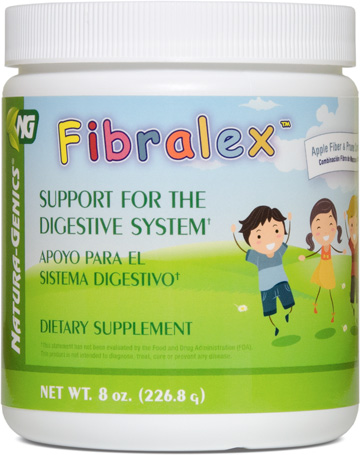
Fibralex™

8 oz Powder  •  226.8 g

Fibralex bottle

Adequate dietary fiber intake is essential during childhood, as it helps promote healthy digestion and normal bowel function. Based on current health information, most American children do not consume recommended amounts of dietary fiber to support good health and disease prevention. A helpful guideline for children over the age of 2 is to consume at least their age plus 5 grams of fiber per day.

The American Academy of Pediatrics recommends the following amounts of fiber intake:

2 – 3 years: 19 grams
4 – 8 years: 25 grams
9 – 11 years (girl): 26 grams
9 – 11 years (boy): 31 grams 

Based on information from the Journal of Nutrition, dietary fiber intake should be increased gradually throughout childhood by increasing the consumption of a variety of vegetables and fruits, and to a lesser extent, legumes, cereals, and other whole-grain products. Fiber supplements also appear to be a safe and beneficial way to increase fiber intake. Although excessively high fiber intake during childhood may have adverse effects, the potential health benefits of a moderate increase in dietary fiber far outweigh the possible risks, particularly in highly industrialized countries such as the United States.

Fibralex™ has been formulated to help support children’s digestive system. It is a combination of five ingredients known for their restorative qualities for the large intestine.

This product contains the following ingredients:

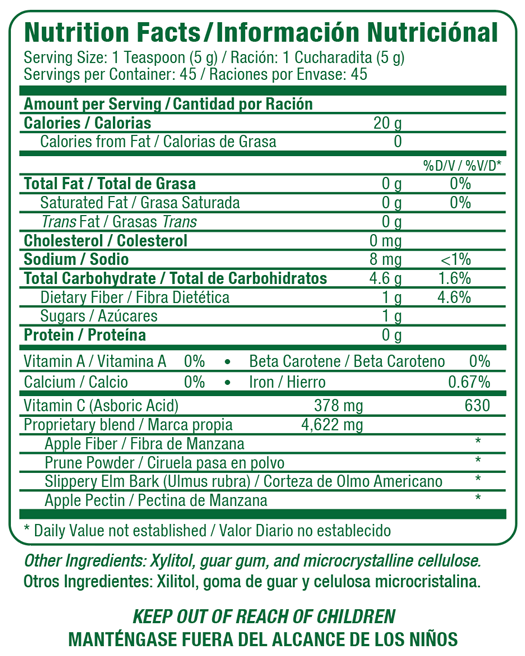
Vitamin C – supports digestive health by strengthening the gut lining, balancing gut bacteria, improving nutrient absorption, promoting reduced inflammation, and protecting against oxidative stress. 

Apple fiber and apple pectin – promote digestive health by adding bulk to stools for healthy bowel movements, reducing constipation, slowing digestion for better nutrient absorption and fullness, and acting as prebiotics to feed good gut bacteria.   

Prunes – boost digestive health by providing soluble and insoluble fiber, along with sorbitol, which work together to reduce constipation, promote regularity, and support a healthy microbiome.  

Slippery elm bark – offers various potential benefits for digestive health, primarily due to its high content of mucilage, a gel-like agent that coats and soothes the mucous membranes of the gastrointestinal tract. 

Supplement Facts
Adequate dietary fiber intake is essential during childhood, as it helps promote healthy digestion and normal bowel function. Based on current health information, most American children do not consume recommended amounts of dietary fiber to support good health and disease prevention. A helpful guideline for children over the age of 2 is to consume at least their age plus 5 grams of fiber per day.

The American Academy of Pediatrics recommends the following amounts of fiber intake:

2 – 3 years: 19 grams
4 – 8 years: 25 grams
9 – 11 years (girl): 26 grams
9 – 11 years (boy): 31 grams 

Based on information from the Journal of Nutrition, dietary fiber intake should be increased gradually throughout childhood by increasing the consumption of a variety of vegetables and fruits, and to a lesser extent, legumes, cereals, and other whole-grain products. Fiber supplements also appear to be a safe and beneficial way to increase fiber intake. Although excessively high fiber intake during childhood may have adverse effects, the potential health benefits of a moderate increase in dietary fiber far outweigh the possible risks, particularly in highly industrialized countries such as the United States.

Fibralex™ has been formulated to help support children’s digestive system. It is a combination of five ingredients known for their restorative qualities for the large intestine.

This product contains the following ingredients:

Vitamin C – supports digestive health by strengthening the gut lining, balancing gut bacteria, improving nutrient absorption, promoting reduced inflammation, and protecting against oxidative stress. 

Apple fiber and apple pectin – promote digestive health by adding bulk to stools for healthy bowel movements, reducing constipation, slowing digestion for better nutrient absorption and fullness, and acting as prebiotics to feed good gut bacteria.   

Prunes – boost digestive health by providing soluble and insoluble fiber, along with sorbitol, which work together to reduce constipation, promote regularity, and support a healthy microbiome.  

Slippery elm bark – offers various potential benefits for digestive health, primarily due to its high content of mucilage, a gel-like agent that coats and soothes the mucous membranes of the gastrointestinal tract.