
Prostate Gland Kit
30 / 30 Capsules
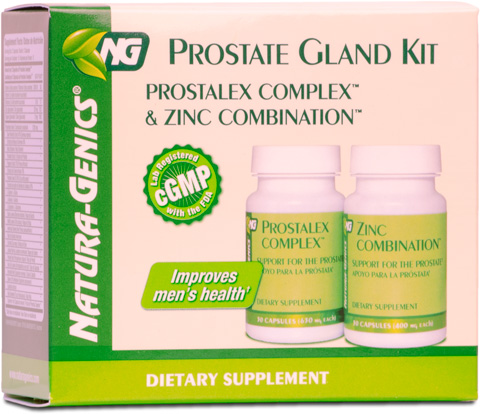
This kit includes Prostalex Complex™ and Zinc Combination™. Both products are formulated to support prostate health and are paired together to provide a comprehensive approach to men’s wellness. They include a blend of vitamins, minerals, herbal extracts, amino acids, and additional compounds.
The prostate gland is an important organ in the male reproductive system. It is located below the bladder, and is about the size of a walnut. The prostate is responsible for producing semen, the fluid that transports sperm. As men age, they become more likely to develop prostate health problems, including enlarged prostate or benign prostatic hyperplasia (BPH), and many other prostate conditions.
Ingredients
Beta-Carotene – a powerful antioxidant that the body naturally converts into vitamin A. Researchers in Boston reported in the Journal of Cancer that men who had low levels of beta-carotene in their blood could reduce the risk of prostate complications by as much as 32% by taking beta-carotene in supplement form every other day.
Vitamin E – Men with benign prostatic hyperplasia (BPH) may have lower levels of vitamin E (d-alpha tocopherol) than men without BPH. The role of vitamin E in conditions such as BPH and prostatitis has not been extensively studied. However, the antioxidant and anti-inflammatory properties of vitamin E may help people suffering from these conditions.
Zinc – concentrations of zinc in the prostate gland are higher than in any other soft tissue in the organism. It is an important component for DNA synthesis, immune function, and antioxidant activity. Many publications support the protective role of zinc and prostate health.
Copper – this mineral has been added to the formula, since zinc can cause copper deficiency by competing for absorption.
Saw Palmetto – In the early twentieth century, saw palmetto berry tea was commonly recommended by herbalists for a variety of urinary tract ailments in men. The liposterolic (fat-soluble) extract of saw palmetto provides concentrated amounts of free fatty acids and sterols. Laboratory studies have shown that saw palmetto may help inhibit certain growth factors and inflammatory substances that are believed to contribute to benign prostatic hyperplasia (BPH).
Beta Sitosterol – Studies have shown that beta sitosterol is effective in promoting reduced symptoms of benign prostatic hyperplasia (BPH). Beta sitosterol is one of a group of organic compounds found in plants that may also promote reduced levels of cholesterol in the bloodstream.
Pygeum – the bark was used to promote the relief of urinary disorders in African herbal medicine. European scientists were so impressed with the information on pygeum’s activity that they began laboratory investigations on the active constituents in the bark. This led to the development of the extract used today for prostate health.
Nettle – the polysaccharides (complex sugars) and lectins of nettle appear to be the main active constituents. Test tube studies suggest that the leaves promote anti-inflammatory activity. This effect may occur because nettle helps inhibit the body’s production of inflammatory compounds known as prostaglandins. Nettle root affects hormones and proteins that carry sex hormones such as testosterone or estrogen. This may explain why nettle benefits men who have benign prostatic hyperplasia.
Pumpkin – by the late nineteenth century, pumpkin seeds were commonly used to help with urinary tract conditions and digestive problems such as gastritis. They contain several major groups of active constituents: essential fatty acids, amino acids, phytosterols, minerals, and vitamins. Pumpkin seed oil has been effectively used with saw palmetto to promote the reduction of symptoms associated with benign prostatic hyperplasia.
L-Glycine, L-Alanine, and L-Glutamine – these amino acids are needed for maintaining normal prostate function. Studies have shown that the intake of certain amino acids helps reduce symptoms of benign prostatic hyperplasia. Men taking these amino acids experienced improvements such as reduced nighttime urination, decreased urgency and frequency, and relief from delayed or difficult urination.
Buchu – the leaves have a long history of use in traditional herbal medicine for urinary tract complications. Buchu is used by herbalists to promote urinary tract and prostate health.
Queen of Meadow – considered a soothing herb for the urinary mucous membranes as well as a diuretic agent used for many urinary tract problems. It works well on the kidneys, bladder, prostate gland, uterus, and liver. This herb relaxes, stimulates, and tones the pelvic viscera and mucous membranes.
Cayenne – most herbalists recognize cayenne as one of the most valued and useful herbs in the herb kingdom. It has several applications and works as a catalyst, increasing the effectiveness of other herbs when used with it.
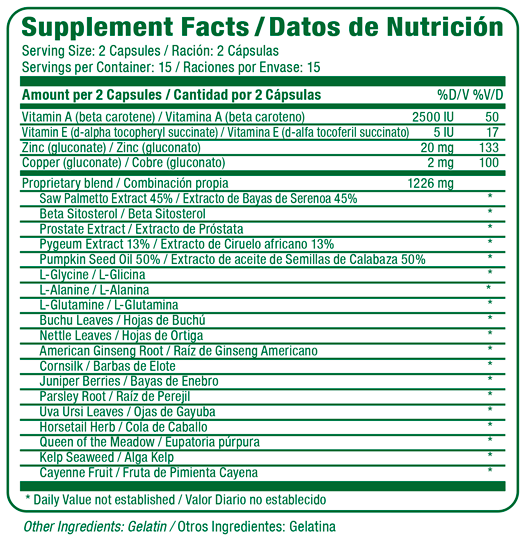
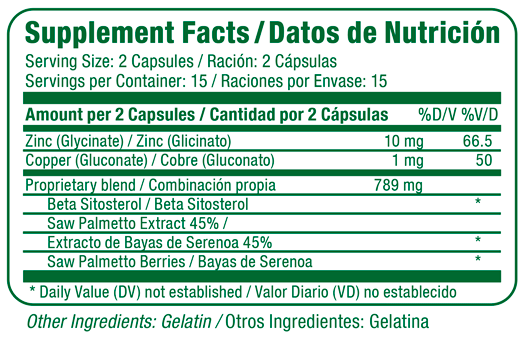
Supplement Facts
Recommendations
Where to Buy

