
Gastril™
60 Veggie Capsules
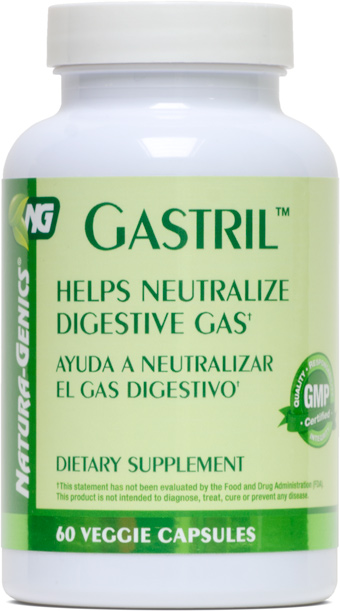
Gastril™ is a safe and effective combination of activated charcoal and five quality herbs. This supplement has been formulated to promote the relief of excess flatulence.
Flatulence is defined as the presence of a large amount of gas in the digestive tract. Excess gas is expelled through the mouth (belching) or through the anus (flatulence) or is absorbed through the walls of the digestive tract into the blood and then secreted by the lungs. Bacteria in the digestive system also break down (metabolize) some gases into a simpler, more easily excreted form.
Other gases are produced in the digestive system by several means. Hydrogen, methane, and carbon dioxide are produced as bacteria break down and process food in the intestine (bacterial metabolism). People who lack sufficient enzymes to break down certain sugars, such as lactose, the sugar found in milk, often produce excess gas after consuming foods that contain these sugars. Most people will develop some degree of flatulence when eating large amounts of protein or fruits.
Ingredients
Activated charcoal is considered a safe decontaminant in the gastrointestinal (GI) tract (stomach and intestines). It is considered to be the most effective agent available for flatulence, and after a person swallows or absorbs almost any toxic drug or chemical. Activated charcoal may help reduce the absorption of up to 60% of harmful substances. It works by binding chemicals throughout the gastrointestinal tract, helping to limit their potential toxicity.
Classified as a carminative herb (relieving flatulence), peppermint has been used as a general digestive aid and employed in cases of indigestion and intestinal colic. Peppermint leaves yield approximately 1% or less of volatile oil, which is composed primarily of menthol and menthone.
Spearmint is used to promote the relief of nausea, indigestion, gas, and cramps. A report published in the Journal of Food Chemistry indicates that spearmint has high phenolic and flavonoid content.
Anise has been used for centuries in European herbalism to promote digestive and respiratory health. The active constituent is the terpenoid anethole, contained in its volatile oil. This oil gives the plant a delightful flavor. The oil is also antispasmodic, promoting the relief of intestinal gas.
Fennel seeds are commonly used in herbalism. Similar to anise, fennel contains the terpenoid anethole and other terpenoids that inhibit spasms in smooth muscles such as those in the intestinal tract. This is thought to contribute to fennel’s use as a gas-relieving agent.
Ginger has been used in Traditional Chinese Medicine for over 2,500 years. It has a variety of uses, including supporting relief from abdominal bloating, coughing, vomiting, and more. Ginger is considered a tonic for the digestive tract, stimulating digestion and toning the intestinal muscles.
Supplement Facts

Recommendations
Where to Buy

