Diabetrim+™

90 Capsules

Diabetrim Plus bottle
Diabetrim+ Capsules

Diabetes mellitus is a metabolic disorder characterized by the body’s inability to properly metabolize carbohydrates due to insufficient insulin production or the body’s inability to effectively use insulin. People with this condition are not able to properly process glucose, a type of sugar the body uses for energy. As a result, glucose stays in the blood, causing blood glucose to rise. At the same time, however, body cells can be glucose-starved. Diabetes can lead to several serious conditions involving the eyes, kidneys, nerves, and heart.

There are two types of diabetes mellitus, type 1 and type 2. Childhood-onset diabetes is also called type 1, or insulin-dependent diabetes. This condition requires pharmacological therapy, as the pancreas cannot produce sufficient insulin to process glucose. With type 2 (adult-onset) diabetes, or non-insulin-dependent diabetes, the pancreas often produces enough insulin, but the body has difficulty using it.

Diabetrim+™ has been formulated to support glucose control. This product contains a combination of vitamins, minerals, herbs, glandular extracts, and other natural components.

Ingredients

The vitamins and minerals in this supplement play an important role in supporting healthy glucose metabolism. Research suggests that deficiencies in certain vitamins and minerals may affect the body’s ability to maintain normal glucose control. Diabetrim+™ also contains pancreatin, alpha lipoic acid, and the amino acid L-glutathione.

The following botanicals to promote glucose control have been included in this supplement:

Gymnema sylvestre is commonly used in weight-loss and glucose-control products. This is attributed to gymnemic acids in this plant, which delay glucose absorption into the bloodstream. The atomic structure of gymnemic acid’s molecules is similar to that of glucose. These molecules fill the taste bud receptors, preventing activation by sugar molecules in food, thereby reducing sugar cravings.

Cinnamon is an ancient herbal compound mentioned in Chinese herbalism for as long as 4000 years. It has a broad range of applications for various disorders. Various terpenoids found in the volatile oil are believed to account for cinnamon’s therapeutic effects. Important among these compounds are eugenol and cinnamaldehyde. Test-tube studies have shown that cinnamon promotes insulin action in people with high glucose levels.

Fenugreek seeds contain alkaloids (mainly trigonelline) and protein high in lysine and l-tryptophan. Its steroidal saponins (diosgenin, yamogenin, tigogenin, and neotigogenin) and mucilaginous fiber are believed to account for many of fenugreek’s beneficial effects. Preliminary, double-blind trials have found that fenugreek supports improved blood sugar control in people with type 2 diabetes.

Bitter Melon grows in tropical areas, and the fruit is the most prevalent part of the plant. It is used for a few conditions, including glucose control. At least three distinct groups of constituents have been reported to promote blood sugar-lowering activity. These include a blend of steroidal saponins (charantin), insulin-like peptides, and alkaloids.

Wereke has been used in Northern Mexico for decades to help manage glucose levels. Most studies have been evaluated only in animal models (primarily mice), with promising results. At the end of the studies, most mice showed improved glycemia, body weight, and triglyceride levels. Although research has not yet determined an effective dosage for human use, many people report improvement in their condition.

Nopal (cactus) has shown benefits in supporting blood sugar control. The blood glucose-lowering effects of nopal are attributed to its high fiber content, including polysaccharides and pectin. Nopal contains compounds such as soluble fiber (mucilage and pectin), insoluble fiber (hemicellulose, cellulose, and lignin), polyphenols, ascorbic acid, and water. The presence of these compounds makes nopal a valuable agent with a low glycemic index.

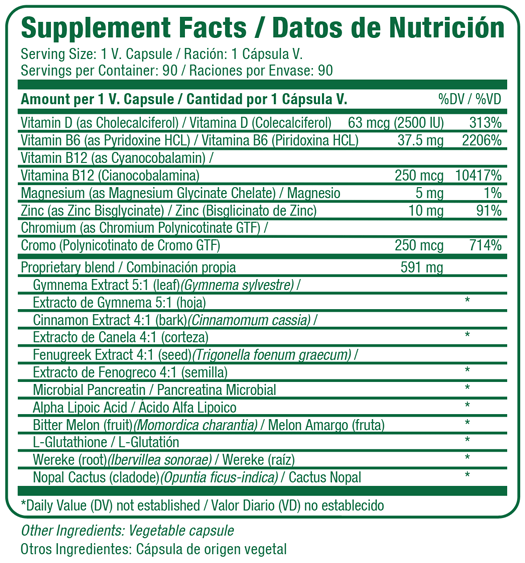
Diabetrim Plus Supplement Facts

Diabetes mellitus is a metabolic disorder characterized by the body’s inability to properly metabolize carbohydrates due to insufficient insulin production or the body’s inability to effectively use insulin. People with this condition are not able to properly process glucose, a type of sugar the body uses for energy. As a result, glucose stays in the blood, causing blood glucose to rise. At the same time, however, body cells can be glucose-starved. Diabetes can lead to several serious conditions involving the eyes, kidneys, nerves, and heart.

There are two types of diabetes mellitus, type 1 and type 2. Childhood-onset diabetes is also called type 1, or insulin-dependent diabetes. This condition requires pharmacological therapy, as the pancreas cannot produce sufficient insulin to process glucose. With type 2 (adult-onset) diabetes, or non-insulin-dependent diabetes, the pancreas often produces enough insulin, but the body has difficulty using it.

Diabetrim+™ has been formulated to support glucose control. This product contains a combination of vitamins, minerals, herbs, glandular extracts, and other natural components.

Ingredients

The vitamins and minerals in this supplement play an important role in supporting healthy glucose metabolism. Research suggests that deficiencies in certain vitamins and minerals may affect the body’s ability to maintain normal glucose control. Diabetrim+™ also contains pancreatin, alpha lipoic acid, and the amino acid L-glutathione.

The following botanicals to promote glucose control have been included in this supplement:

Gymnema sylvestre is commonly used in weight-loss and glucose-control products. This is attributed to gymnemic acids in this plant, which delay glucose absorption into the bloodstream. The atomic structure of gymnemic acid’s molecules is similar to that of glucose. These molecules fill the taste bud receptors, preventing activation by sugar molecules in food, thereby reducing sugar cravings.

Cinnamon is an ancient herbal compound mentioned in Chinese herbalism for as long as 4000 years. It has a broad range of applications for various disorders. Various terpenoids found in the volatile oil are believed to account for cinnamon’s therapeutic effects. Important among these compounds are eugenol and cinnamaldehyde. Test-tube studies have shown that cinnamon promotes insulin action in people with high glucose levels.

Fenugreek seeds contain alkaloids (mainly trigonelline) and protein high in lysine and l-tryptophan. Its steroidal saponins (diosgenin, yamogenin, tigogenin, and neotigogenin) and mucilaginous fiber are believed to account for many of fenugreek’s beneficial effects. Preliminary, double-blind trials have found that fenugreek supports improved blood sugar control in people with type 2 diabetes.

Bitter Melon grows in tropical areas, and the fruit is the most prevalent part of the plant. It is used for a few conditions, including glucose control. At least three distinct groups of constituents have been reported to promote blood sugar-lowering activity. These include a blend of steroidal saponins (charantin), insulin-like peptides, and alkaloids.

Wereke has been used in Northern Mexico for decades to help manage glucose levels. Most studies have been evaluated only in animal models (primarily mice), with promising results. At the end of the studies, most mice showed improved glycemia, body weight, and triglyceride levels. Although research has not yet determined an effective dosage for human use, many people report improvement in their condition.

Nopal (cactus) has shown benefits in supporting blood sugar control. The blood glucose-lowering effects of nopal are attributed to its high fiber content, including polysaccharides and pectin. Nopal contains compounds such as soluble fiber (mucilage and pectin), insoluble fiber (hemicellulose, cellulose, and lignin), polyphenols, ascorbic acid, and water. The presence of these compounds makes nopal a valuable agent with a low glycemic index.