
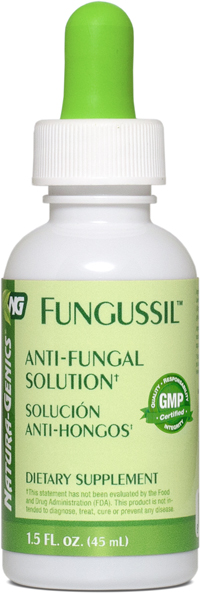
Fungussil™
1.5 FL. oz. • 45 mL.
Fungi can infect skin and mucous membranes. They can grow under the nails, between toes, and on internal surfaces of other organs.
Skin fungal infections commonly develop in areas where the skin tends to be moist, and where the skin surface is in contact with another, such as the groin area (jock itch) and between the toes (athlete’s foot). However, moist, possibly itchy, red patches anywhere on the body can indicate a fungal infection.
Fungal infection of the mouth is referred to as oral thrush, a condition in which creamy-looking white patches form in the tongue and mucous membranes of the mouth.
Paronychia is inflammation of the skin around a finger or toenail. It can be acute (less than six weeks) or chronic (persisting for more than six weeks).
Ringworm is a fungal infection of the skin or scalp characterized by the development of small red spots that grow to a size of one-quarter inch in diameter. As the spots expand, the centers tend to heal and clear while the borders are raised, red, and scaly, giving them a ring-like appearance. Like other fungal infections, ringworm can be very itchy.
Recurrent fungal infections are a common sign of depressed immune function and commonly develop in people with diabetes or other serious conditions.
Fugussil™ has been formulated as an antifungal solution. For external use only.
Ingredients
Tea tree grows in Australia and Asia. The oil from the leaves is used medicinally. Australian natives used the leaves to treat cuts and skin infections. During World War I, Australian soldiers were given tea tree oil as a disinfectant, which led to its commercial production. The oil contains a variety of chemicals known as terpenoids. It also contains the compound cineole. The oil is functional against fungi and bacteria. A double-blind trial found that 10% tea tree oil cream was effective as an antifungal agent against athlete’s foot.
The name lavender is derived from the Latin word “lavare,” which means to wash. The earliest recorded use of lavender dates back to ancient Egypt. An article published in the Journal of Microbiology reports that lavender oil has demonstrated antifungal activity against several skin-pathogenic fungi and species of Candida, suggesting potential usefulness against antifungal-resistant infections. The discovery was made by scientists at the University of Coimbra in Portugal, who distilled lavender oil from the Lavandula viridis L’Hérshrub that grows in southern Portugal. Their work demonstrated that these oils function by destroying fungal cells and damaging the cell membrane.
Oregano is native to the Mediterranean region, but is cultivated worldwide. The leaves and volatile oil are used medicinally. Oregano contains several constituents, including volatile oils such as carvacrol, thymol, and borneol, as well as flavonoids like rosmarinic acid, along with triterpenoids, sterols, and vitamins A and C. The thymol and carvacrol in oregano are responsible for promoting its antimicrobial and antifungal effects. A test-tube study demonstrated that the oil carvacrol inhibited the growth of Candida albicans far more effectively than a commonly used antifungal agent called calcium and magnesium caprylate. According to results from another study in Australia, in addition to its antifungal activity, oregano oil also promotes antimicrobial activity against a wide range of bacteria.
Sangre de grado is still used in traditional South American medicine today in much the same way it has been used by Indigenous peoples. It is full of phytochemicals, including proanthocyanidins (antioxidants), simple phenols, diterpenes, phytosterols, and biologically active alkaloids and lignans. Scientists have attributed many of its biologically active properties to two active constituents: the alkaloid taspine and the lignan dimethylcedrusine. Sangre de grado has many therapeutic applications, one of which is its use as an antifungal.
Recommendations
Recommendations: Wash affected area well with soap, warm water and dry thoroughly before use. Apply and rub in the morning and at night. Since fungi are highly resistant, it is recommended to continue its use for 3 more weeks even after apparent eradication of fungi.
Caution: Do not use this product if pregnant or nursing. Do not use this supplement if the band around the cap is broken or missing. If symptoms persist, consult a doctor. Keep this product out of reach of children.
Storage: Keep in a cool and dry place.
For External Use Only
The statements above have not been evaluated by the Food and Drug Administration (FDA). This product is not intended to diagnose, treat, cure or prevent any disease.
The content on this website is for informational purposes only and is based on research from books, journals, and publications. It is not intended to replace medical advice from your physician or other healthcare providers. Natura-Genics® is not responsible for any adverse effects, outcomes, or consequences resulting from the use or misuse of the information provided on this website. All matters regarding your physical health should always be supervised by a healthcare professional.
Where to Buy


