
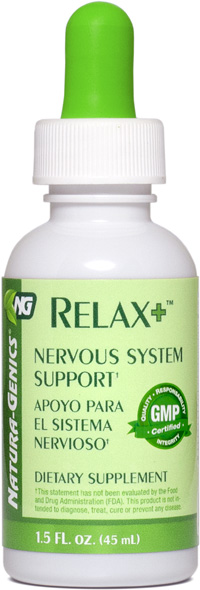
Relax+™
1.5 FL. oz. • 45 mL.
In today’s society, many people thrive on performance, perfection, and competition, which can lead to excessive stress. Work environment, family problems, financial constraints, genetics, previous trauma, chemical imbalance, and many other factors also contribute to increased levels of stress. According to the National Institute of Mental Health, 40 million adults in the United States are affected by anxiety, and millions more by depression-related disorders. Overall, it’s estimated that 18% of adults have some form of mental illness.
When people encounter stressful situations, the organism reacts by releasing various hormones, including adrenaline. In its initial phase, stress can cause symptoms such as palpitations, lack of breath, anxiety, distress, and many other symptoms. These are usually short-term, but uncontrolled stress can lead to more serious mental health consequences, such as a chemical imbalance, psychological instability, behavioral problems, and more. In addition, stress can contribute to the development of several autoimmune diseases, cardiovascular disease, and even cancer.
Stress can trigger the following effects: sleep disturbances, muscular tension, digestive disorders, irritability, agitation, depression, low self-esteem, anxiety, burnout, increased isolation, family problems, and many others.
People manage stress in different ways. Keeping a positive attitude, practicing relaxation or biofeedback techniques, exercising regularly, eating a healthy diet, resting, and sleeping may all help. In addition, supplements that support the nervous system may be beneficial.
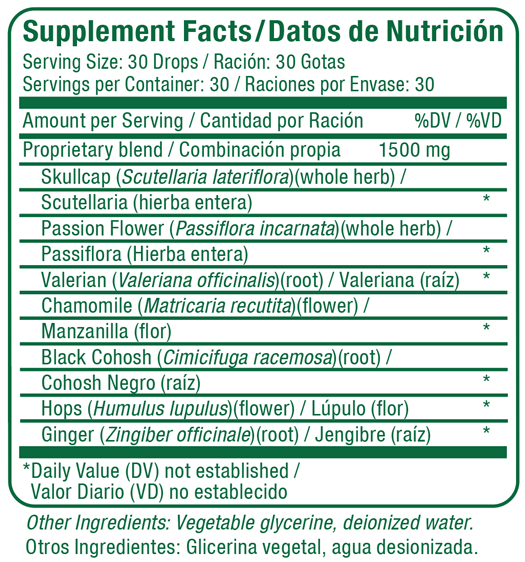
Relax+™ in liquid form contains seven ingredients that have been specially selected for the natural relief of stress, fatigue, tension, and nervousness.
American skullcap is native to North America and is now widely cultivated in Europe and various parts of the world. Herbalists have used it for more than 2000 years as a mild relaxant and as therapy for anxiety, nervous tension, and convulsions. Research has shown that skullcap has significant antioxidant effects and may protect against various neurological disorders. It is believed that skullcap stimulates gamma-aminobutyric acid (GABA), an important neurotransmitter for the central nervous system.
Historically, passion flower has been used much like it is today, primarily as a mild sedative. Medicinal use of this herb in the United States did not begin until the late 19th century. Passion flower was used for nervous restlessness and gastrointestinal spasms. It was primarily believed to influence the nervous system and was commonly used for feelings of anxiety associated with mental strain and overwork. Some research, including a double-blind study, suggests that passion flower may be effective in managing anxiety symptoms.
The use of valerian for nervous conditions, especially insomnia, has been common for many centuries. By the 18th century, it was an accepted sedative and was also used for nervous disorders associated with a restless digestive tract. Valerian root contains various constituents, including volatile oils that appear to contribute to its sedating properties. Central nervous system sedation is regulated by GABA-A receptors in the brain, and according to some studies, valerian may weakly bind to these receptors to promote a sedating effect.
Chamomile has been used for centuries in Europe, especially in Germany. The flowers of chamomile contain 1-2% volatile oils, including alpha-bisabolol, alpha-bisabolol oxides A & B, and matricin (usually converted to chamazulene). Other active constituents include flavonoids, apigenin, luteolin, and quercetin. These active ingredients promote anti-inflammatory, antispasmodic, and smooth muscle-relaxing effects, particularly in the gastrointestinal tract.
Native Americans valued black cohosh and used it for many conditions, ranging from gynecological problems to insomnia. Black cohosh contains several components, including triterpene glycosides and isoflavones. A review of several studies found black cohosh to be both safe and effective for symptomatic relief of menopausal hot flashes. Other symptoms that improved included night sweats, insomnia, nervousness, and irritability.
Utilized by many herbalists, hops is considered a mild sedative and natural remedy for insomnia. The German Commission E monograph recommends this herb for anxiety or insomnia. Hops is often combined with other herbs, such as valerian and passion flower, in herbal preparations.
Ginger is part of the formula and used in various formulations, as it acts as a catalyst for other herbs, leading to better absorption.
Supplement Facts
Recommendations
Where to Buy


