
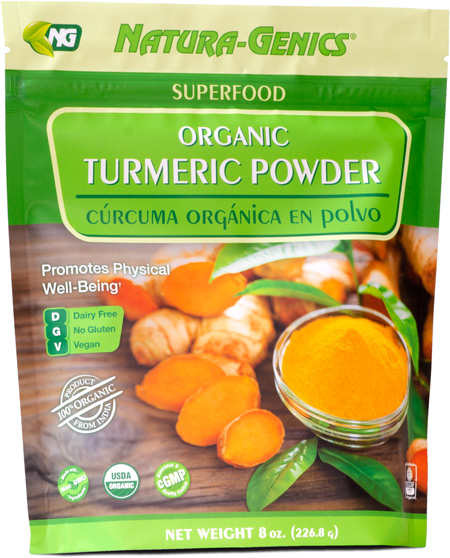
Organic Turmeric Powder
8 Oz • 226.8 g
Turmeric has been used in traditional medicine for centuries, dating back almost 4,000 years. It has been used in Southeast Asia not only as an important spice but also in religious celebrations. Because of its strong yellow color, turmeric is also known as Indian saffron. Today, the medical and scientific community increasingly recognizes turmeric’s therapeutic potential, as reflected by more than 3,000 research publications over the past 20 years.
Turmeric is a product of Curcuma longa, a rhizomatous herbaceous perennial plant belonging to the ginger family Zingiberaceae, native to tropical South Asia. As many as 133 species of curcuma have been identified worldwide. India produces nearly all of the world’s turmeric crop and consumes eighty percent of it. With its inherent qualities and high amounts of the important bioactive compound curcumin, Indian turmeric is considered the best in the world.
More than 100 components have been identified in turmeric. The root contains a volatile oil rich in compounds such as turmerone, as well as naturally occurring pigments known as curcuminoids, which give turmeric its characteristic yellow color. Curcuminoids consist of curcumin, demethoxycurcumin, 5’-methoxycurcumin, and dihydrocurcumin, which are natural antioxidants.
According to Ayurvedic medical texts, turmeric has a long history of medical use in South Asia. Ayurvedic Compendium, dating back to 250 BC, recommends an ointment containing turmeric to relieve the effects of food poisoning, one of its many uses.
In folk medicine, turmeric has been used in therapeutic preparations for centuries in different parts of the world. In Ayurvedic practices, turmeric is thought to have many medicinal properties, including strengthening the body’s overall energy, relieving gas, dispelling worms, improving digestion, regulating menstruation, dissolving gallstones, relieving arthritis, and helping conditions related to cellular degeneration.
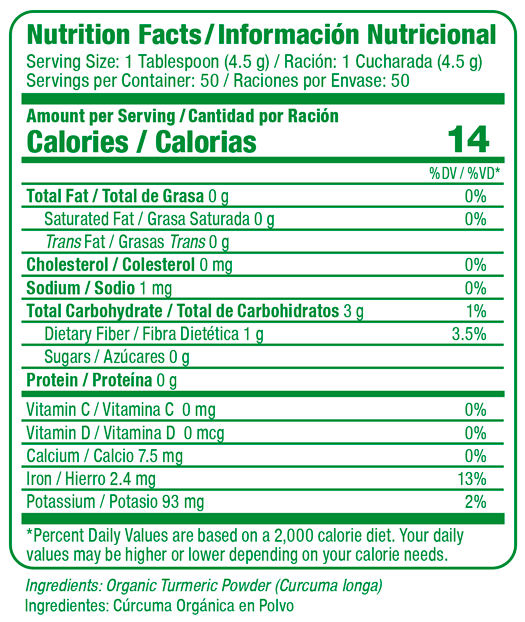
Supplement Facts
Recommendations
Where to Buy


