
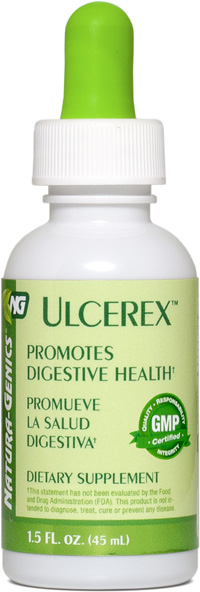
Ulcerex™
1.5 FL. oz. • 45 mL.
Digestive ulcers are painful sores in the lining of the stomach that can result in unpleasant discomfort and sometimes lead to complications. Ulcers affect 10% of the United States population, particularly adults aged forty and above.
These types of ulcers develop mostly in the stomach (gastric ulcers) or in the initial part of the small intestine (duodenal ulcers). Ulcers can be defined as injuries in the lining of the digestive tract. Similar to a wound on the hand, ulcers can be painful, especially when in contact with acid from the stomach.
The lining of the digestive tract is equipped with a defense mechanism that fights off harmful aggressors. When there is an imbalance between the defense system and aggression agents, an ulcer generally develops. Possible factors responsible for the development of digestive ulcers are: tobacco, alcohol, stress, greasy and spicy foods, H. pylori bacteria, and certain types of medications.
Symptoms produced by digestive ulcers may vary depending on the type of ulcer and the severity of the condition. Most people with ulcers complain of burning sensations or pain in the upper abdomen. The pain could fluctuate depending on nutritional intake. It can be either aggravated or relieved by eating food. Other symptoms include burping, bloating, nausea, vomiting, and the presence of blood in vomit or stool.
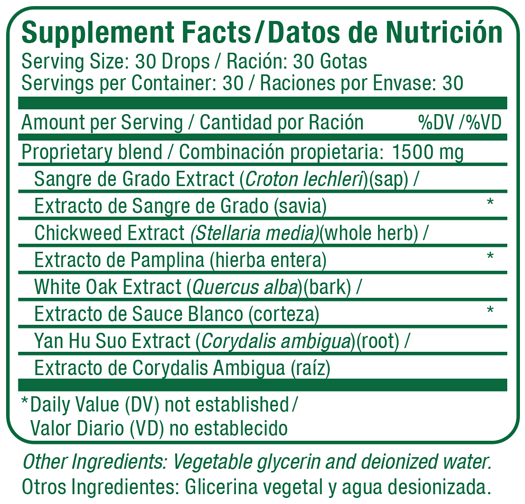
Ulcerex™ is a unique combination of four quality herbs in liquid form, formulated to support the digestive system. This product contains sangre de grado extract, an ingredient frequently used in regions of the Amazon for diverse conditions.
With a long history of indigenous use in the rainforests of South America, sangre de grado has been traditionally used since at least the 1600s. The resin is still used in South American traditional medicine today in ways similar to its historical indigenous use. In Peruvian herbal medicine, it is recommended for wounds, hemorrhaging, and vaginal douche. It is also used internally for various conditions of the digestive, respiratory, and immune systems. Sangre de grado is full of phytochemicals, including proanthocyanidins (antioxidants), simple phenols, diterpenes, phytosterols, and biologically active alkaloids and lignans. Scientists have attributed many of the biologically active properties to two active constituents: the alkaloid taspine and the lignan dimethylcedrusine.
Historically, chickweed was sometimes used as a food. In folk medicine, it has earned a reputation for its traditional use in supporting a wide range of conditions, from digestive comfort to skin health, including concerns such as eczema and psoriasis. The active compounds in chickweed are not totally known. It contains relatively high amounts of vitamin C and flavonoids, which may partly explain its effectiveness for skin irritations and itching. It is also commonly used by people with stomach and duodenal ulcers.
White oak bark has been traditionally used by herbalists for hemorrhoids, varicose veins, and diarrhea. Tannic acid, derived from oak trees, has a long history of applications in tanning hides. Tannins are the primary constituents of oak bark. These tannins are potent astringents, similar to those found in witch hazel. Tannins bind liquids, absorb toxins, and soothe inflamed tissues. Astringents such as white oak bark may also help relieve the pain of sore throats and canker sores.
Yan Hu Suo (Corydalis ambigua) is a herb used for centuries in Traditional Chinese Medicine (TCM) for stomach and duodenal ulcers. Recent research has confirmed its gastroprotective, anti-inflammatory, and antibacterial (especially against H. pylori) properties. The effects appear to be due to alkaloids such as berberine and dehydrocorydaline that help reduce sores and inflammation and protect the stomach lining.
Supplement Facts
Recommendations
Where to Buy


