
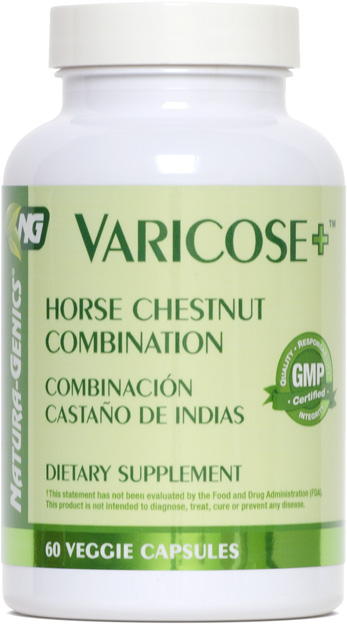
Varicose+™
60 Veggie Capsules
Varicose veins are twisted, enlarged veins close to the surface of the skin. They can occur almost anywhere, but mostly occur in the esophagus and legs.
Veins that return blood to the heart contain valves that prevent blood from flowing backward due to the force of gravity. When these valves weaken, blood pools in leg veins, causing them to bulge. These enlarged vessels are called varicose veins. Standing and sitting for long periods of time, lack of physical exercise, obesity, and pregnancy can cause varicose veins.
Symptoms of varicose veins may include dull pain, itchiness, or a heavy sensation in the legs. The sensation is worse after prolonged standing and better when the legs are elevated. Varicose veins typically appear on the legs as dilated veins close to the surface of the skin, and may look blue. Advanced varicose veins may cause ankle and leg swelling or skin ulcers.
Varicose+™ is a combination of vitamins, herbs, and herbal extracts formulated to support leg vein vitality. This product contains horse chestnut extract, known to promote circulation in the lower legs.
Ingredients
Horse chestnut is native to Asia and northern Greece, but is now cultivated in many parts of Europe and North America. Modern horse chestnut extracts are usually made from the seeds, which are high in the active constituent aescin. Horse chestnut has several uses, but the most common are for problems of venous circulation, including varicose veins and hemorrhoids.
The roots and young stems of butcher’s broom are often used medicinally. This plant was named butcher’s broom because the mature branches were bundled and used as brooms by butchers. Steroidal saponins are believed to be responsible for the medicinal actions of butcher’s broom. These constituents are reported to promote vein strength and tone while also acting as mild diuretics. They may also lead to constriction of the veins, which helps blood return from the extremities. Butcher’s broom extract also promotes a mild anti-inflammatory effect.
Also called vitamin P, citrus bioflavonoids are used in alternative medicine to enhance the antioxidant effects of vitamin C and in health cases where inflammation is present. Citrus bioflavonoids have particularly beneficial effects on capillary strength and stability. By strengthening capillaries, citrus bioflavonoids can promote elasticity while helping prevent further damage.
Although native to North America, witch hazel now also grows in Europe. The leaves and bark of the tree are used in herbal medicine. Tannins and volatile oils are the main active constituents in witch hazel. These constituents contribute to the strong astringent effect of witch hazel. Pharmacological studies have suggested that witch hazel promotes vein strength and has anti-inflammatory effects.
Vitamin C helps strengthen the walls of arteries, veins, and capillaries (microscopic blood vessels between arteries and veins). Vitamin C is best taken with flavonoids, which enhance the way the body uses the vitamin.
Vitamin E softens and helps widen stressed veins, giving more room for blood flow. This vitamin also improves circulation by protecting platelets from sticking to blood vessel walls.
Rutin is a type of bioflavonoid found in certain vegetables and fruits. It has powerful antioxidant properties and can assist the body in producing collagen with vitamin C. Traditionally, rutin has long been used to promote circulation. It is believed that rutin can help strengthen and increase the flexibility of blood vessels, such as arteries and capillaries.
Hawthorn berries contain a variety of bioflavonoids that appear to be primarily responsible for the cardiac actions of the plant. Hawthorn is thought to exert many beneficial effects on the heart and blood vessels. This includes improved coronary artery blood flow and strengthened heart muscle contractions. Hawthorn may also promote circulation to the extremities by lowering blood flow resistance in peripheral blood vessels.
Ginkgo biloba contains a high concentration of bioflavonoids, which help diminish the appearance of varicose veins. It does this by strengthening the vein wall tissue, therefore promoting better blood flow.
Prickly ash is considered a mild circulatory stimulant. It may be used where there is poor circulation, such as chilblains, leg cramps, varicose veins, and varicose ulcers.
Yarrow has been traditionally used in herbal medicine for wounds and inflammation. The alkaloid obtained from yarrow, known as achilletin, reportedly stops bleeding in animals.
Gotu kola is a valuable herb for varicose veins because it tones the connective tissue around veins, keeps the veins flexible, and encourages blood flow. In an Italian research study, people taking gotu kola had measurably better vein function than those taking a placebo. Most studies on this herb have been done in Europe using a standardized extract.
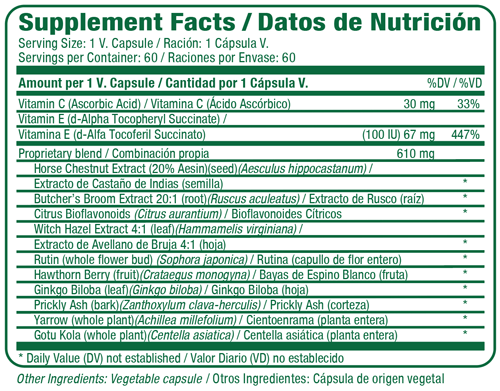
Supplement Facts
Recommendations
Where to Buy


